
Bench Warrants in Allendale County
A bench warrant is court process, often tied to a missed appearance or another court-directed event. South Carolina forms distinguish a bench warrant after failure to appear from one after trial in absentia. The Allendale court handling the underlying case controls the record and any later action.
Family support warrants use a separate Family Court process. Do not assume that a municipal ticket, circuit case, and support matter follow the same route. The case number and issuing court are the first details to identify.
Allendale County FTA Bench Warrants Use SCCA523
The South Carolina Summary Court Bench Book lists SCCA523 as the bench warrant after failure to appear form. It separates the court, defendant, case number, FTA date, underlying charge, judge action, service area, and return. Those fields describe process; a blank form does not show that a warrant was issued in a particular case.
Read each event in order. An issuance date is not the same as service, surrender, recall, or a later disposition. Ask the issuing Allendale court which event is recorded now.
South Carolina Summary Court Bench Book forms lists the blank form and related materials.
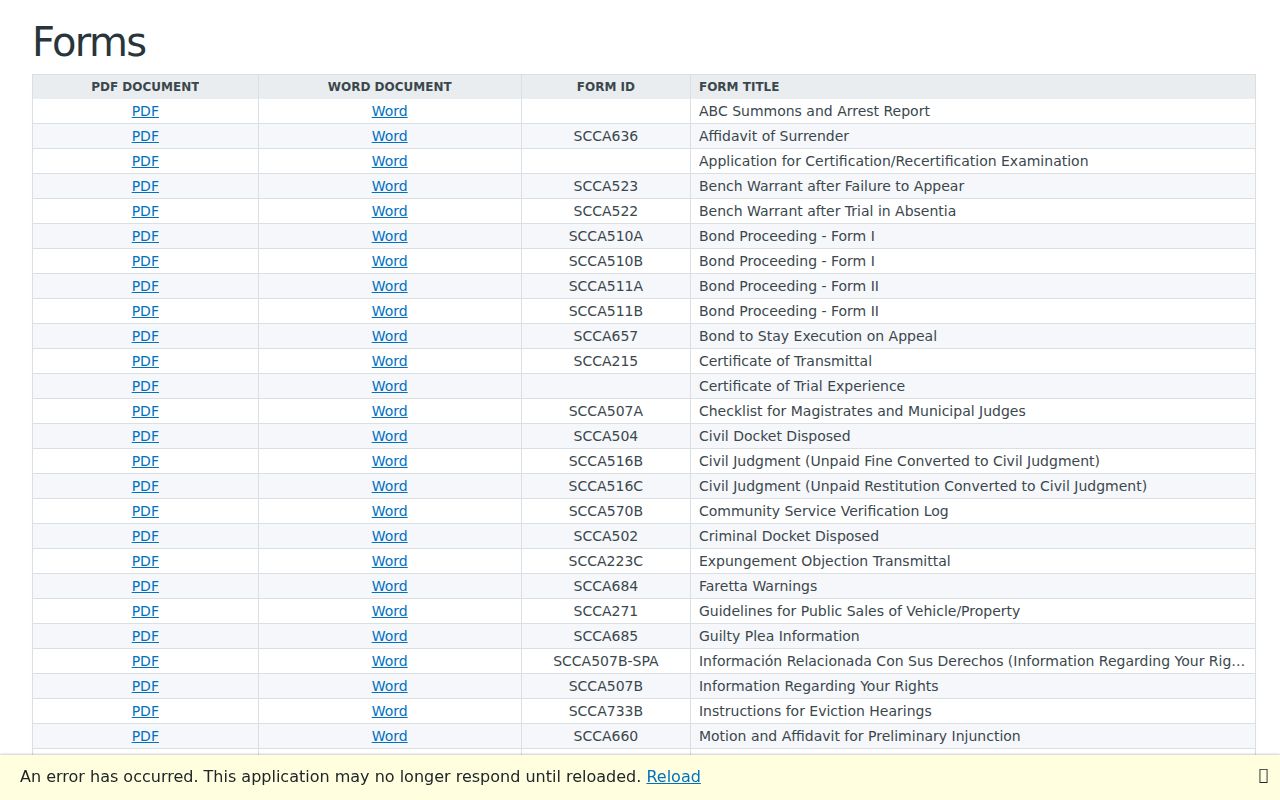
The public form is a field map only. Do not copy a completed warrant into a public record guide.
How an Allendale County Bench Warrant Is Issued
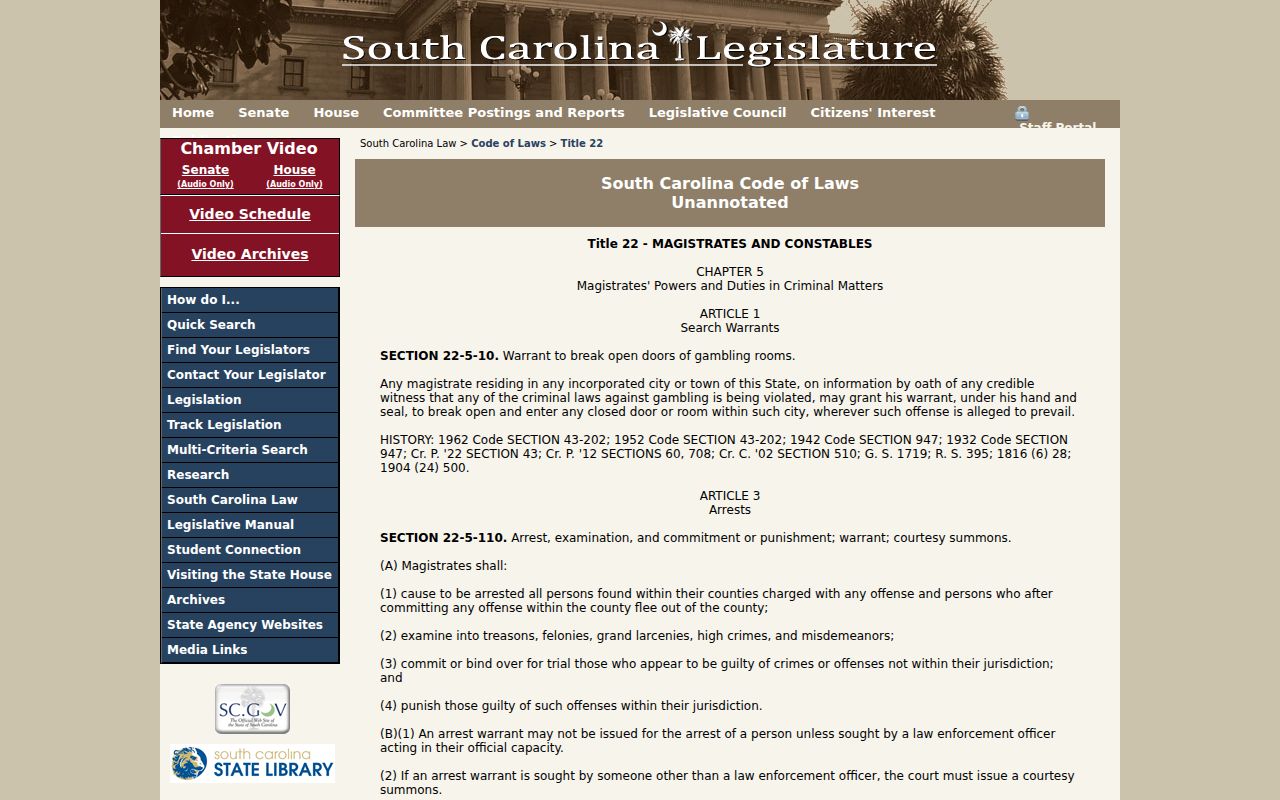
A missed required appearance can lead to a bench-warrant process under the court’s rules and the governing law. South Carolina Code §22-5-115 addresses summonses and consequences after a failure to appear. A summons itself is still a directive to appear; it should not be ignored because it is not titled “warrant.”
The judge’s order and docket control what follows. The research did not verify a single county database feed or a statewide public active-warrant register. After an event appears, contact the issuing court about service, a new date, bond, recall, or another authorized step.
Allendale County Bench Warrants Need Court Contact
If a date was missed, preserve the summons, citation, bond paper, and case number. Call the office shown on the paper and ask whether it handles the file, whether the judge must act, and whether counsel or a surety should take part. The research does not verify a grace period or a routine mailed warning for Allendale cases.
Do not travel to a courthouse or detention center based only on an unclear screen. Confirm the destination, time, and documents with the court first. The Allendale Title 22, Chapter 5 process statutes explain the court framework, not a personal case outcome.
Each case has its own order. A general rule cannot tell a reader which action the judge will require.
Bench Warrant vs Arrest Warrant
A bench warrant responds to a court event, often a failure to appear. An arrest warrant follows a different legal process based on the required showing for arrest. The exact order and case history matter more than a short label in a search result.
| Feature | Bench Warrant | Arrest Warrant |
|---|---|---|
| Trigger | A missed required appearance or another court event | A legal basis for arrest under the applicable process |
| Who issues it | The judge handling the existing case | A judge or magistrate with authority |
| Case link | Often tied to a case already on the court calendar | May begin a new criminal case or process |
| Next step | Ask the issuing court about appearance, recall, quash, or bond | Ask the issuing authority or counsel about service and appearance |
Allendale County Magistrate and Bond Warrant Routes
Allendale Magistrate Court is listed at 398 Barnwell Highway with phone 803-584-3755. Allendale County Bond Court is listed in Fairfax at 168 Law Enforcement Court and shares that phone. Bond Court is a contact point, not a complete warrant database.
Use the court name on the case paper to choose the first call. If a bond or custody issue is involved, ask whether the Bond Court, the issuing judge, counsel, or a surety must act. The Judicial Branch magistrate directory lists both Allendale entries.
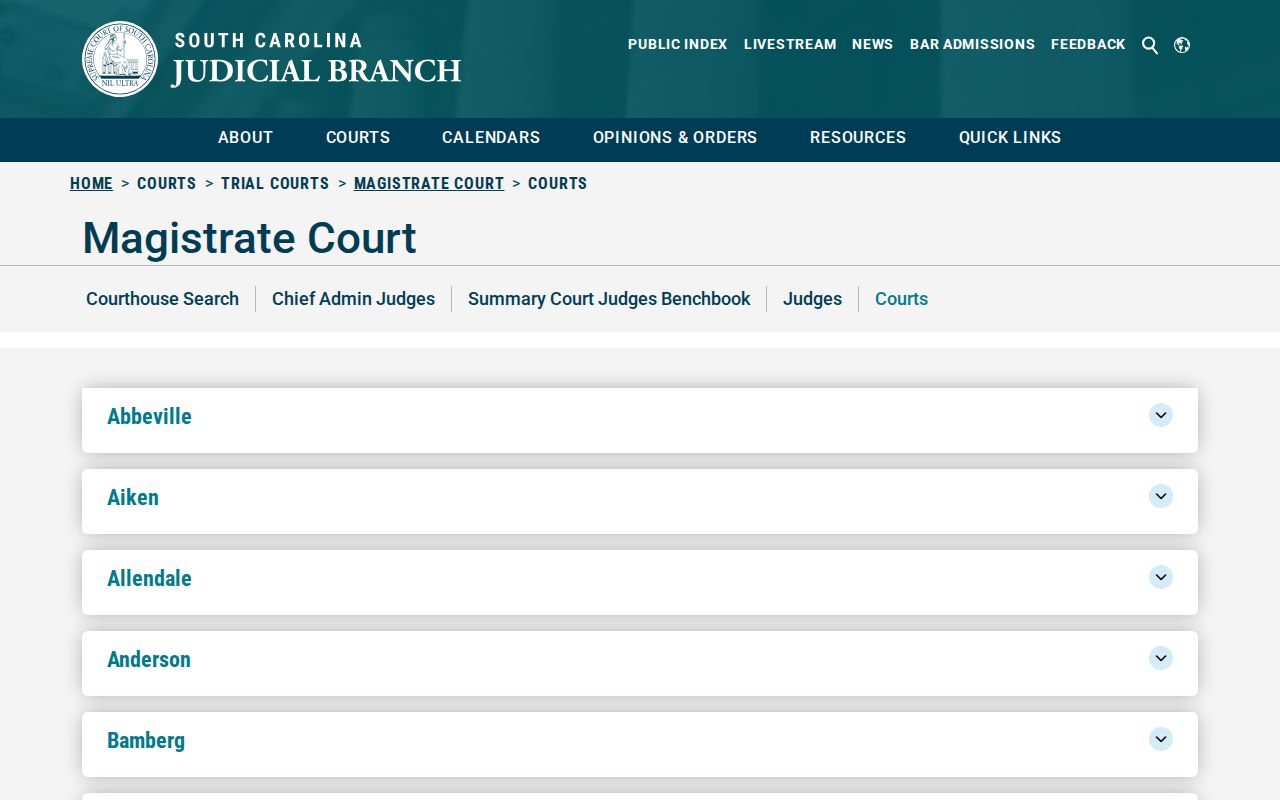
The directory gives a route to the office. It does not decide whether a particular warrant is current.
How to Resolve a Bench Warrant
First verify the court and case number. Then ask whether the judge requires a motion, appearance, bond action, or surrender. A lawyer can explain which route fits the case and whether a surety needs to act. Do not assume that an online payment alone ends an FTA process.
- Find the case number, issuing court, and event shown in the Public Index or on the paper.
- Call the court and ask what procedure the judge authorizes, including whether counsel must file a motion.
- Confirm the time, place, and any bond or surety role before appearing.
- Keep the order, receipt, or docket entry that documents the later court action.
Caution: Do not assume a bench warrant expired or that payment ended it. Confirm the court’s instructions and keep written proof of any resolution.
Allendale County Surety Bench Warrant Forms
SCCA636 is titled “Affidavit of Surrender of Defendant by Surety.” It is not a general self-surrender form. The document asks for the bond, surety, case identifiers, and the term said to have been violated. A person on bond should ask the court, counsel, or surety whether that form applies.
Do not download and file a surety form without direction. The South Carolina court-forms library lists bench-warrant forms, while the Summary Court Bench Book includes FTA forms and surrender materials.
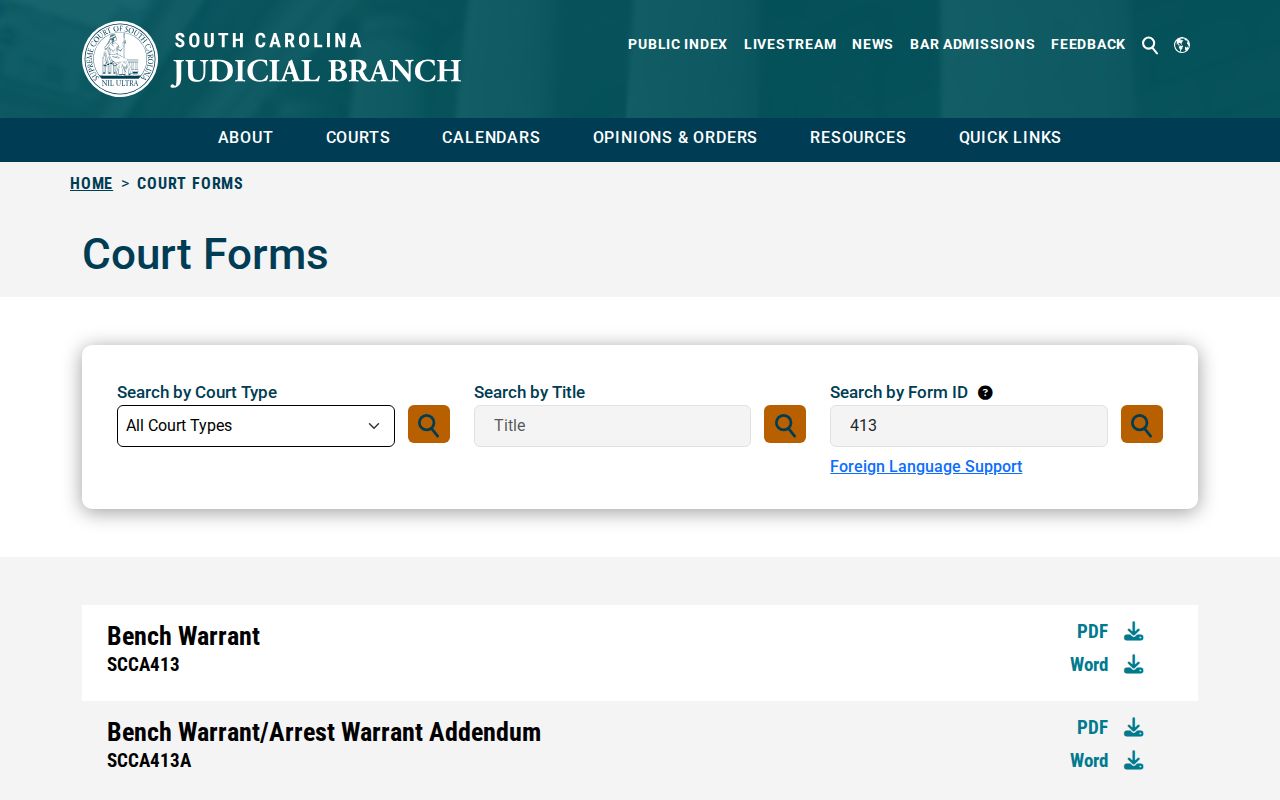
Forms explain roles and fields; the issuing court decides the process in a live case.
Allendale County Municipal Bench Warrants Stay Local
Allendale Municipal Court and Fairfax Municipal Court have separate Judicial Branch entries. The reviewed directory lists no Sycamore or Ulmer municipal court. A town’s presence in the county does not prove it has a separate warrant portal or court.
If the paper names a municipal court, contact that court first. If it names Family Court or federal court, use that branch’s route instead of the municipal docket. The official form library can explain process labels, but only the named court can explain the case.
The court list is a routing aid, not evidence that an unlisted town has no other legal arrangement. See the South Carolina municipal-court directory for the current entries.
Which Allendale County Court Issued It
A bench warrant remains tied to the court that handled the underlying case. Circuit matters go through the Clerk of Court at 803-584-2737; Magistrate Court is at 803-584-3755; and municipal courts have their own records contacts. The Sheriff may serve process, but it does not replace the issuing judge.
The Public Index can help find the court agency, and the Judicial Branch directory can supply its contact. For the countywide search steps, use the Allendale County warrant-search route and follow the court name shown on the document.